Why your city limit sign lights up at night
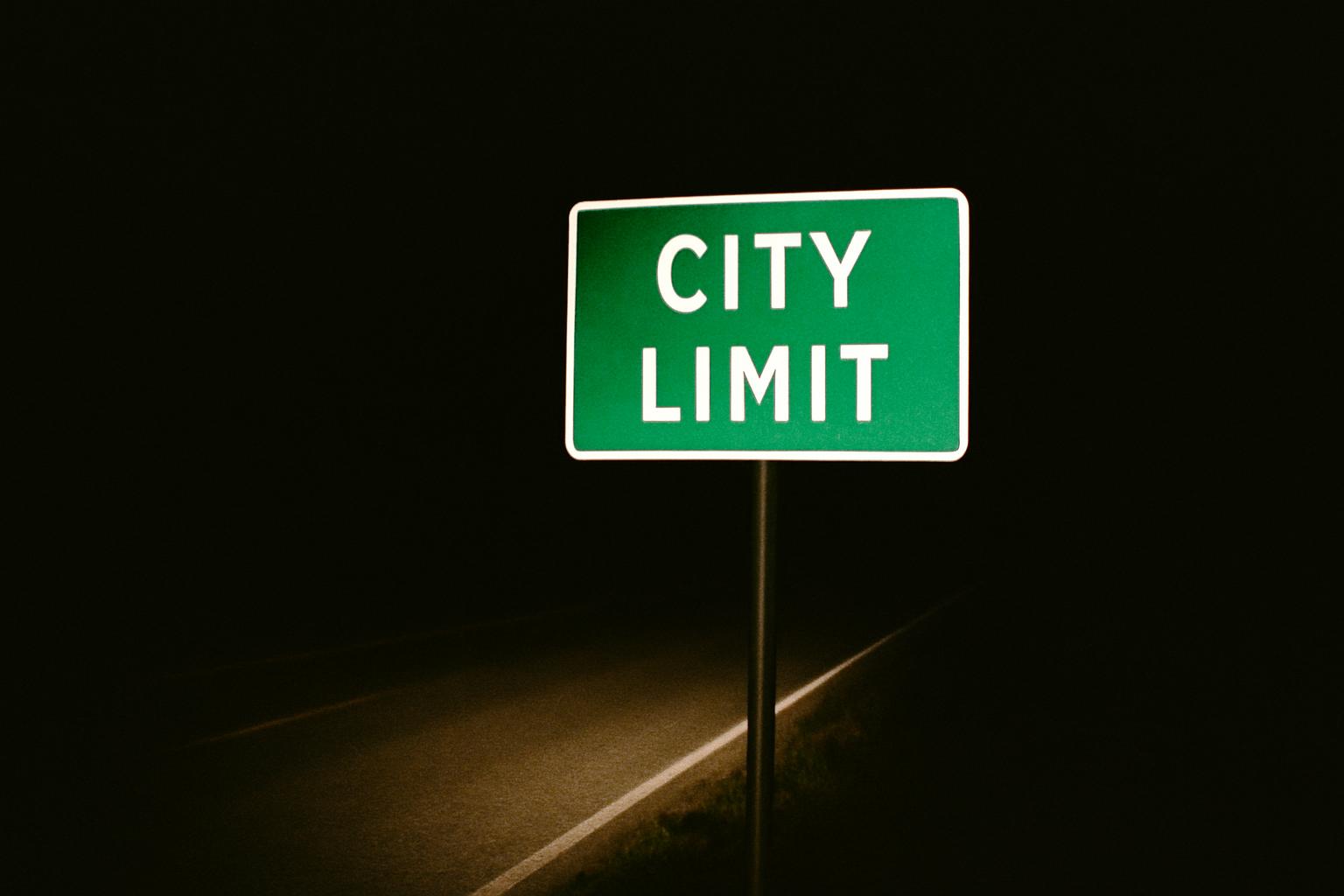
A city limit sign has no bulbs, no wires and no power. Your headlights hit it at night and it lights up like somebody flipped a switch.
Nobody did. The sign is sending your own light back at you.
It's covered in tiny glass beads
The face of a road sign isn't paint. It's a reflective sheeting, and the old-school version is packed with glass beads smaller than grains of sand.
Light from your headlights goes into a bead, bends, bounces off the back, and comes back out pointed almost exactly where it came from. That's called retroreflection. A mirror sends light off at an angle. A retroreflector sends it straight back to the source.
Your eyes sit a couple of feet above your headlights, which is close enough to catch the return. That's why the sign blazes for you and looks dull to somebody standing off to the side of the road.
3M sold it first
In the late 1930s, 3M came up with a reflective sheeting it called Scotchlite: glass beads bonded to a film. Before that, a sign at night was either lit by a lamp or it was just a dark shape by the road.
Later versions sealed the beads into tiny cells so weather couldn't get at them. Many newer signs skip the beads and use microscopic prisms instead, which send back even more light. Same trick, better optics.
Somebody gets paid to check at night
Here's the part almost nobody knows. The federal sign manual requires every agency that puts up signs to use a method that keeps them reflective enough to read at night. That rule took effect January 22, 2012.
The manual lists the approved ways to do it. An agency can measure signs with an instrument called a retroreflectometer. It can replace signs on a schedule based on how long the sheeting is expected to last, or swap out every sign in an area at once. Or it can send a trained inspector out to drive the roads after dark and look at the signs the way you do, through a windshield in headlights.
That last one means somewhere tonight, somebody is driving slowly past city limit signs on purpose.
Fading is what finally kills a sign
Sun and weather wear the sheeting down over years. A sign can look fine at noon and barely show up at night. When it drops below the minimum, it's done, no matter how good it looks in daylight.
That's also the moment some signs lose their population number. Missouri, for one, has stopped putting population on new city limit signs, so when an old one there fails its nighttime check, the replacement goes up with the name and nothing underneath.
The sign at the edge of your hometown has been bouncing your own headlights back at you for years. Every time you came home late, it was the first thing that said you'd made it.