The population is coming off the city limit signs
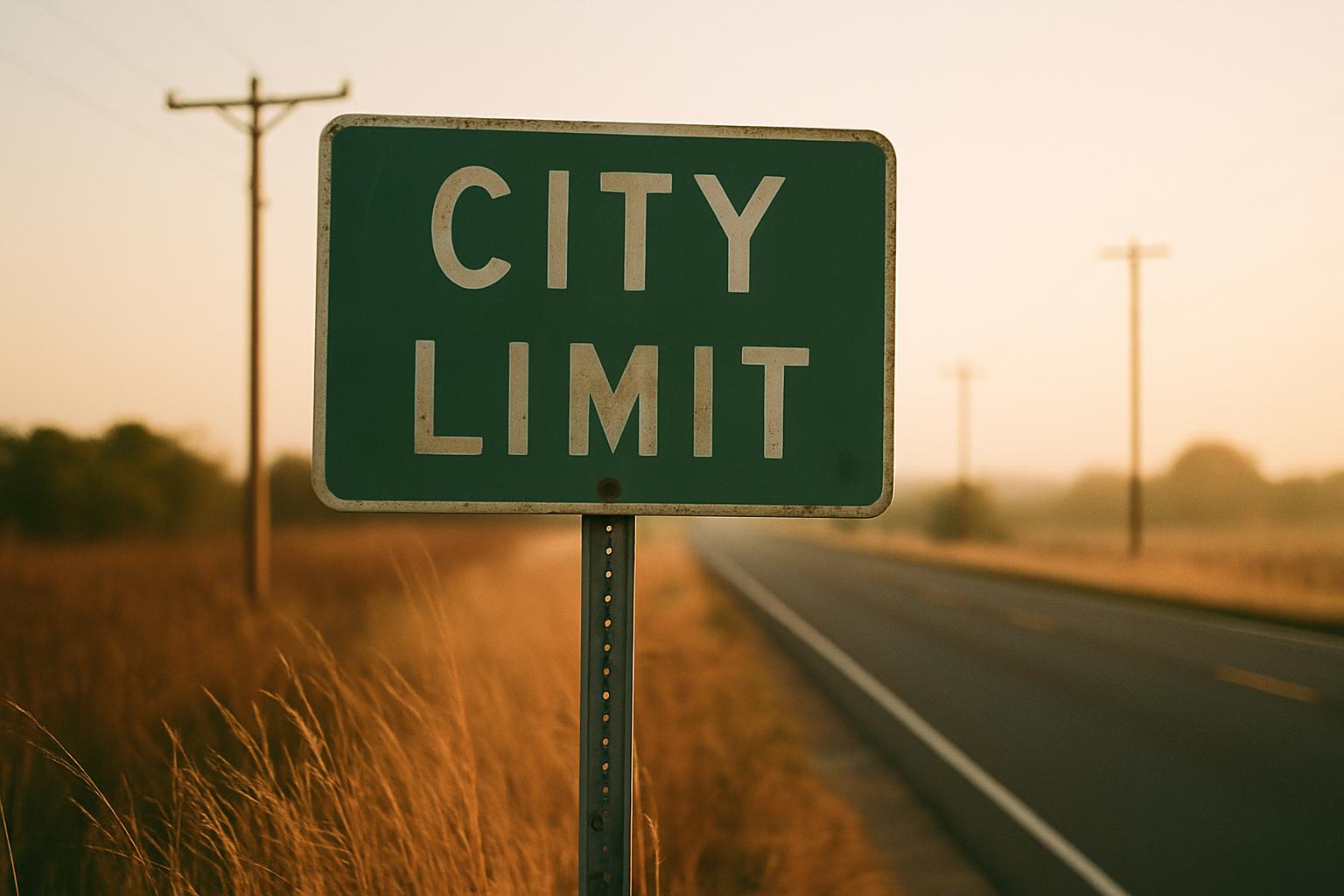
The number is going away.
Not all at once, and not with any announcement you'd have noticed. But if your hometown sign says POP. 3,692 under the city name, that sign is now on a clock. When it fades, gets clipped by a snowplow, or finally rusts through at the bolt holes, the crew that comes out to replace it will put up a new one with your town's name and nothing underneath.
Missouri put it in writing
The Missouri Department of Transportation's engineering guidance says it about as plainly as a state agency ever says anything:
City populations are no longer included on city limit signs. The decision to phase out the display of populations on city limit signs prior to the release of the 11th edition of the MUTCD was due to the pending release of the updated US Census numbers.
And then the part that stings:
Existing city limit signs will continue to display the city population until the end of the sign's service life with no option to update the display.
No option to update. Your town can grow by four thousand people and that sign will keep insisting otherwise until the day it comes down.
It came down to money
The MUTCD is the Manual on Uniform Traffic Control Devices, the federal rulebook the Federal Highway Administration publishes for every sign, signal, and stripe on American roads. The 11th edition landed in December 2023.
The timing problem is easy to follow. A new Census means new population figures. New population figures mean every city limit sign in the state is suddenly wrong. Making them right means fabricating and installing thousands of new signs, in every town, on a ten year cycle, forever.
Somebody ran that number and decided it wasn't worth it. Hard to even argue with, if you're the one holding the budget. It's just that what got cut wasn't a line item. It was the only place most of us ever saw our hometown's population written down.
The standard city limit sign has a designation, by the way. It's I4-1. The version with room for a town logo is I4-1a. Somewhere in a filing cabinet, your hometown is a four-character part number.
Our shirts have the same problem
Worth saying out loud, since we sell the things: the population numbers printed on our shirts are old too.
The database behind this site was loaded on July 30, 2011. The figures in it are Census estimates from a few years before that. Our Austin, Texas shirt says 757,688. Austin is north of nine hundred thousand people now and climbing. That shirt is off by more than the entire population of most of the towns we print.
We could go re-pull every number. At some point we probably will. But there's something fitting about a shirt that's wrong in exactly the same way the sign is wrong, and for exactly the same reason: somebody made a snapshot once, and then life kept going.
The number was never really the point
Here's the thing nobody says about those signs. The population was always a little bit of a lie.
The Census counts once a decade. A sign goes up sometime after that, using whatever figure was current. Then the mill closes, or the interstate goes in two counties over, or a subdivision opens and doubles the school district. By year six the number is folklore. By year nine everybody in town knows it's wrong and nobody's called anybody about it.
Nobody ever slowed down at a city limit sign to fact-check the census. You read it because it told you that you were home, or that you were somewhere new, or that the place you were passing through was small enough to be honest about how small it was. POP. 412 is not a statistic. It's a personality.
Towns like Sidney, New York and Beloit, Wisconsin have had those numbers on the way into town for longer than most people driving past have been alive.
What happens now
The signs that are up stay up. That's the one piece of good news in the guidance. This is not a crew going town to town pulling numbers down, it's a rule about what gets made next.
So the green sign on the edge of your hometown, with the number that's been wrong since you were in high school, is still there. It'll be there a while. Then one winter it won't be, and the one that replaces it will be cleaner, more legible, fully compliant, and it will not tell you a single thing about how many people live there.
Might be worth taking a picture next time you drive past.