Our shirts are a time capsule and we're not fixing them
We keep bringing this up, so let's just make it the whole article and be done.
The population numbers printed on our shirts are old. The database behind this site was loaded in July 2011, off Census estimates from a few years before that. Every figure we print is a snapshot of America somewhere around 2008.
We're leaving them exactly where they are. Here's the case for that.
The numbers are going away for real
We've covered this already, but it's the whole foundation of the argument.
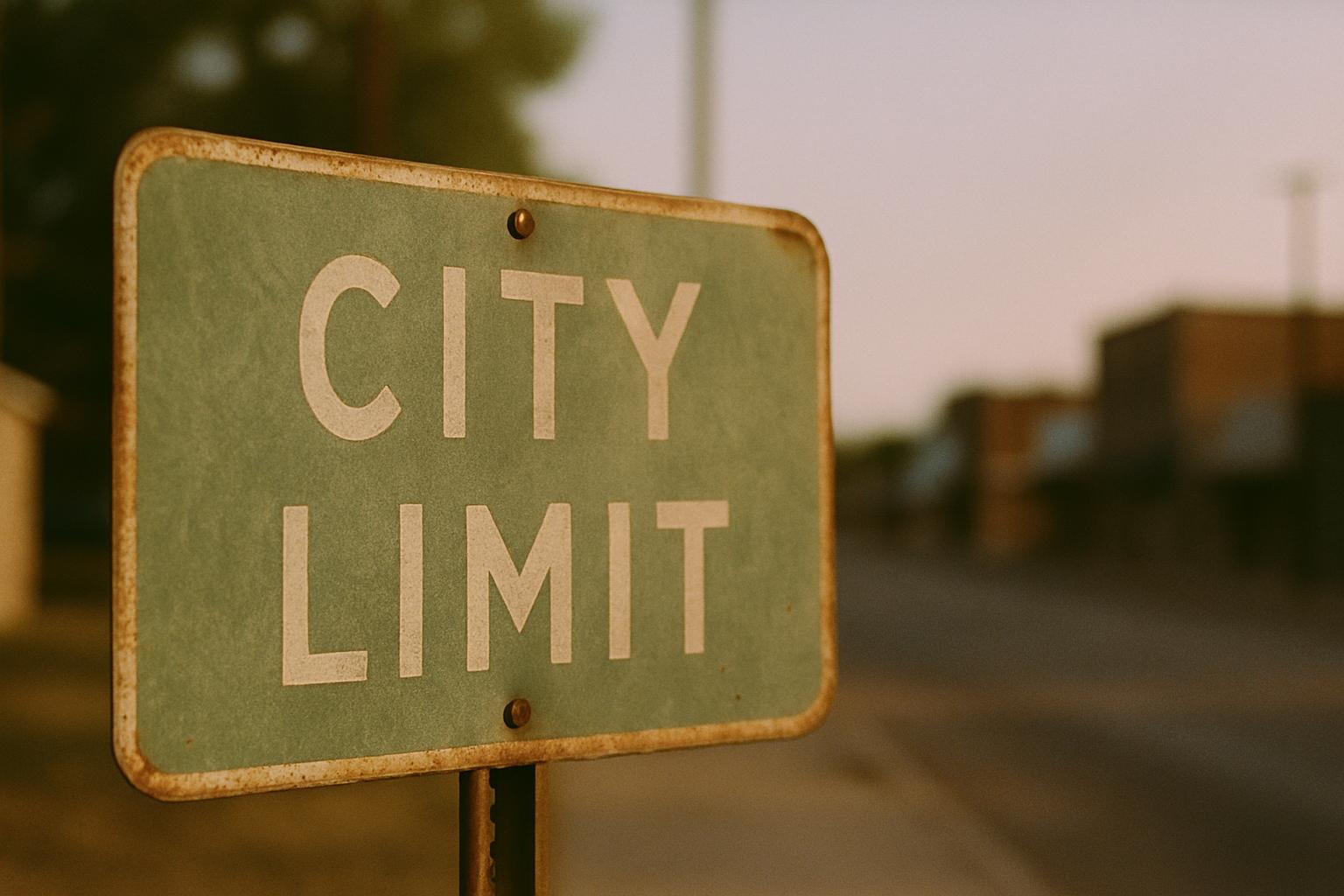
Population counts are being dropped from city limit signs. Missouri's guidance puts it flatly: populations are no longer included, and existing signs keep theirs until the sign wears out, with no option to update. When that sign finally comes down, the replacement will have a name on it and nothing else.
So the thing we print is not a current statistic. It's a record of a convention that is actively being retired. In twenty years there will be a generation of drivers who never saw a number on a town sign at all.
A shirt with POP. 3,692 on it is going to read the way a rotary phone reads now.
The number was always a little bit wrong anyway
This is the part people miss. There has never been a moment when city limit signs across America were accurate.
The Census counts once a decade. Signs get replaced whenever they get replaced. In between, the mill closes or the subdivision opens and nobody drives out with a fresh sign. By the middle of the decade the number is folklore, and everybody in town knows it and nobody minds.
Being off by fifteen years is a difference of degree from being off by six. It was never a live readout. It was always a number somebody wrote down once.
Correcting it would cost the thing it's for
Nobody buys one of these because they want current demographic data. If you want to know your hometown's population right now, that's a ten second search.
You buy it because the sign is the first thing you see coming back into town, and because the number on it is the number that was on it when you were seventeen. For a lot of people our figures are closer to the remembered number than today's count would be.
Updating every shirt to a 2020 count would make them more accurate and less true.
What we're actually going to do
Be upfront about it, which is what this article is.
The numbers on our shirts are late-2000s Census figures. We're not passing them off as current, and we'd rather say so plainly than quietly re-cut thirty thousand designs to chase a number that's going to be stale again in four years and printed on nothing by then.
If we ever rebuild the catalog from scratch, we'll make this an actual choice instead of an inherited accident. There's a decent argument for offering both, a current number and the one from the year you left.
Until then, what you get is a shirt that says what the sign said, back when signs still said it. Wrong in the same direction, for the same reason, as the one outside your hometown.
That seems about right.