Why your town might not have a city limit sign
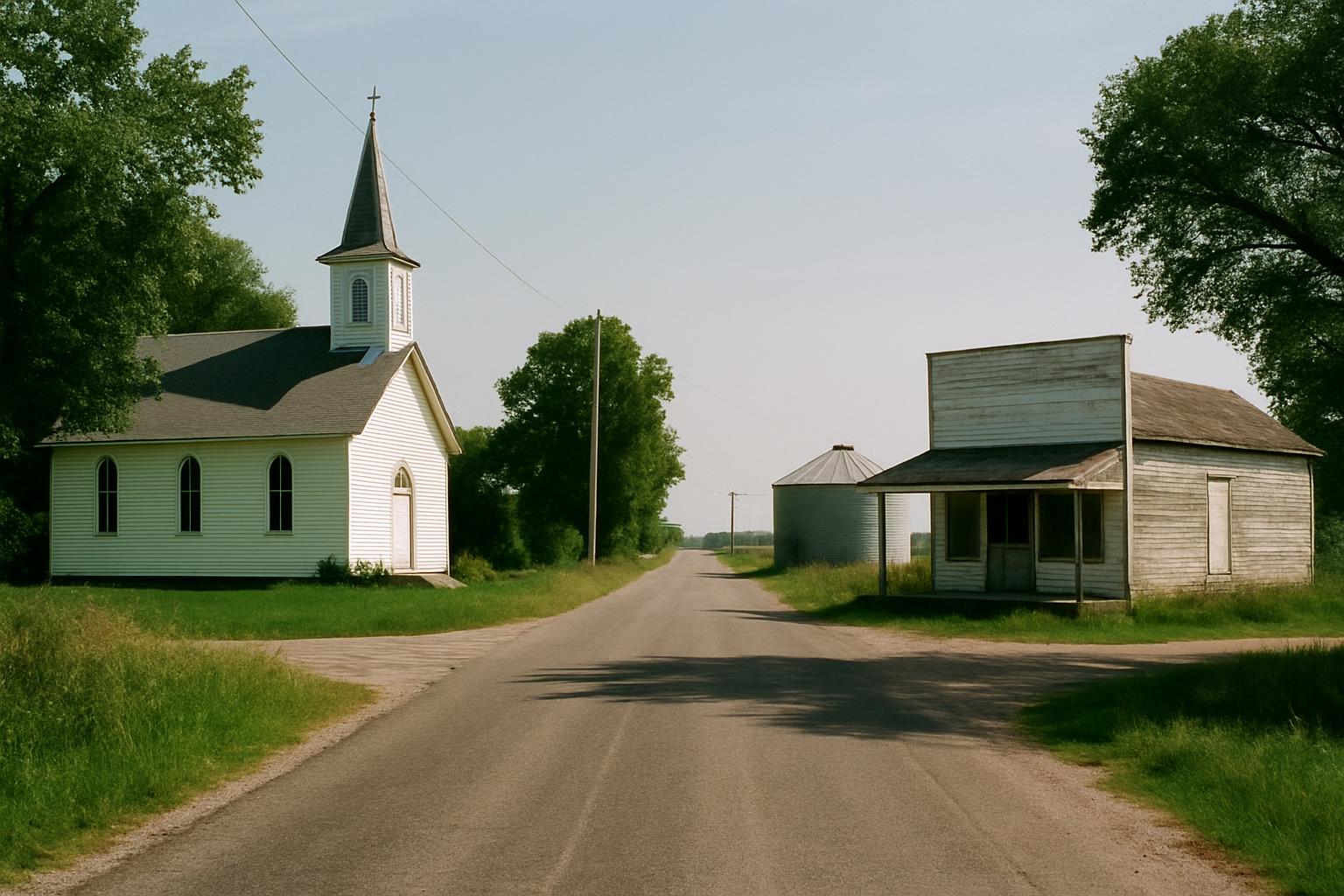
There are places with a name, a post office, a church, a ball field, and four generations of the same families, that have no city limit sign anywhere on the road in.
It isn't an oversight. Legally, there's no city there to put a limit on.
Everything comes down to incorporation
An incorporated town is a town in the eyes of state law. Somebody, at some point, filed paperwork. There was a vote. The state drew a legal boundary around the place and granted it a municipal government, which means elected officials, the power to levy taxes, and the responsibility to run water, sewer, police, and streets.
That legal boundary is the thing a city limit sign marks. The sign isn't decoration, it's a notice that you have crossed into a jurisdiction where a specific government's rules and speed limits now apply.
No incorporation, no boundary. No boundary, nothing to sign.
The Census had to invent a category for everyone else
This left the government with a counting problem. Millions of Americans live in places that are obviously places, with names everyone uses, that legally do not exist.
So the Census Bureau created the Census Designated Place. A CDP is a populated area with a recognized name that gets counted as a unit for statistical purposes. That's the whole job.
A CDP has no local government. No mayor, no council, no city taxes. Its boundaries aren't permanent and can be redrawn between counts, because they were never legal lines to begin with. Somebody at the Census Bureau drew a shape around a community so the numbers would make sense.
Your hometown might be one. It counts, it just doesn't govern.
Who runs things instead
Unincorporated communities are governed by the county. The sheriff handles law enforcement, the county road department handles the roads, and decisions that a town council would make somewhere else get made at a courthouse that might be forty minutes away.
There are real tradeoffs, and people choose them on purpose. No municipal property tax. No town ordinances about what you park in your yard. The flip side is no municipal water, no town police, and nobody local to call when the road washes out.
You'll still see signs, just different ones
Plenty of unincorporated communities do have a sign on the way in. It's usually a different animal.
Sometimes the county or the state puts up a plain community name sign, no "city limit" language, because it's genuinely useful to know what you're driving through. Sometimes a civic club or a booster group paid for one themselves. Those are often the best signs in America, honestly, because somebody wanted them there badly enough to raise the money.
What you won't see is the standardized green rectangle with CITY LIMIT on it, because that specific sign is making a legal claim that an unincorporated place cannot make.
The paperwork doesn't decide what a place is
Incorporation is an administrative fact. It tells you how the trash gets picked up and who sets the speed limit. It tells you nothing about whether a place is real.
Some of the most stubbornly alive communities in this country are legally invisible. They have a name that's been in use for a hundred and fifty years, and a Census category, and a county road running through them, and no sign.
If that's where you're from, the town is still there. It just never filed.